|
December 2013
CNS Foundation eNews
|
|
 |
|
|
|
|
Get Your CNS Foundation Hoodies & T Shirts Now!!!
|
|
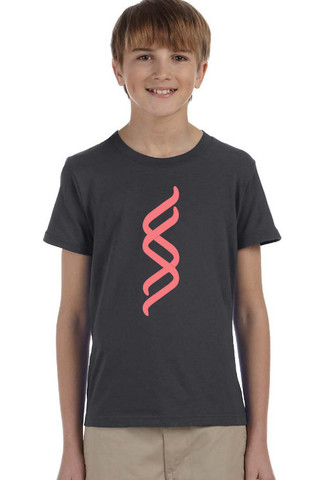
We took our signature DNA logo, updated with the re-launch of the new website in October, and put it on tee shirts, a sweatshirt, even a onesie, and yours is waiting for you just a few clicks away!
Check out the CNS Foundation Store at The Vanity Project to order your own apparel NOW!!!
|
| Order Now |
|
|
|
BLOG
|
|
Community Spotlight: Sproutflix
|
In a world saturated with media of all forms, where can children with neurological conditions find themselves represented?
This is where the nonprofit organization Sprout can be an instrumental tool. Not only does Sprout ensure that developmental conditions are represented in media, but they push to make it the focal point.
"The only distributor of films specifically and exclusively related to the field of intellectual and developmental disabilities," Sproutflix, a branch of Sprout, creates film and media that showcase the stories and work of a generally mis- and underrepresented people.
|
|
|
|
Happy Holidays From All of Us at CNS Foundation!!!
With the holiday season upon us, it goes without saying that two of the things that make this time of year so special is the time spent with family, and the atmosphere of giving to those you love and appreciate.
Our friends at The Vanity Project, believe that the clothes that you wear have the ability to be a billboard for the good organizations you believe in. So they helped us create he perfect gift for all advocates. Instead of simply making a contribution, purchase a tee shirt or a hoodie for the entire family! We even have onsies that are soo cute!!!
A portion of each sale comes back to CNS Foundation. So not only do you get to rock some seriously awesome gear, but you’re also helping to support your favorite organization 😉
Have too many shirts? Tired of doing laundry? Ran out of wrapping paper?
Give the gift of science and donate directly to CNS Foundation so we can continue to advance the field of pediatric neurology and keep you up-to-date with the latest in scientific news.
It is with your support that CNS Foundation can continue work so hard to represent the field of science and support the causes that are so vital to finding the treatments and cures we seek.
|
|
|
|
| Latest News in Scientific Research |
|
|
| Majority of Epilepsy Surgery Patients Enjoy Improved Well-being
Posted by Henry Ford Health System
Overall, the great majority of patients, 92 percent of them, expressed satisfaction with undergoing epilepsy surgery
The majority of epilepsy patients who have brain surgery to treat their disorder are satisfied with the results in reducing epilepsy-related seizures and improving their psychological and social well-being.
READ MORE →
|
|
New Hope for Victims of Traumatic Brain Injury
Posted by American Friends of Tel Aviv University
Researchers from TAU demonstrate hyperbaric oxygen therapy significantly revives brain functions and life quality
Evidence that hyperbaric oxygen therapy (HBOT) should repair chronically impaired brain functions and significantly improve the quality of life of mild TBI patients. The new findings challenge the often-dismissive stand of the US Food and Drug Administration, Centers for Disease Control and Prevention, and the medical community at large, and offer new hope where there was none.
READ MORE →
|
|
Drug Shows Early Promise in Treating Liver Failure-Related Seizures
Posted by University of Rochester
Study suggests a potential new treatment for the seizures that often plague children with genetic metabolic disorders and individuals undergoing liver failure
The team found that the drug bumetanide, a known NKCC1 inhibitor, blocked this process and prevented the cells from overloading with chloride. By knocking down this “secondary” cellular effect of ammonia, the researchers were able to control the seizures in the mice and prolong their survival.
READ MORE →
|
|
Researchers uncover mechanism controlling Tourette Syndrome tics
Posted by The University of Nottingham
Researchers uncover mechanism controlling Tourette Syndrome tics
A mechanism in the brain which controls tics in children with Tourette Syndrome (TS) has been discovered by scientists at The University of Nottingham.
This new study is very important as it indicates that motor and vocal tics in children may be controlled by brain changes that alter the excitability of brain cells ahead of voluntary movements. You can think of this as a bit like turning the volume down on an over-loud motor system. This is important as it suggests a mechanism that might lead to an effective non-pharmacological therapy for Tourette Syndrome.
READ MORE →
|
|
Probiotic Therapy Alleviates Autism-like Behaviors in Mice
Posted by California Institute of Technology
Using the co-occurrence of brain and gut problems in ASD as their guide, researchers are investigating a potentially transformative new therapy for autism and other neurodevelopmental disorders.
The gut microbiota—the community of bacteria that populate the human GI tract—previously has been shown to influence social and emotional behavior, but the Caltech research, published online in the December 5 issue of the journal Cell, is the first to demonstrate that changes in these gut bacteria can influence autism-like behaviors in a mouse model.
"Traditional research has studied autism as a genetic disorder and a disorder of the brain, but our work shows that gut bacteria may contribute to ASD-like symptoms in ways that were previously unappreciated," says Professor of Biology Sarkis K. Mazmanian. "Gut physiology appears to have effects on what are currently presumed to be brain functions."
To study this gut–microbiota–brain interaction, the researchers used a mouse model of autism previously developed at Caltech in the laboratory of Paul H. Patterson, the Anne P. and Benjamin F. Biaggini Professor of Biological Sciences. In humans, having a severe viral infection raises the risk that a pregnant woman will give birth to a child with autism. Patterson and his lab reproduced the effect in mice using a viral mimic that triggers an infection-like immune response in the mother and produces the core behavioral symptoms associated with autism in the offspring.
READ MORE →
|
|
How our nerves keep firing
Posted by University of Utah
Biologists see ultrafast recycling of neurotransmitter-filled bubbles
University of Utah and German biologists discovered how nerve cells recycle tiny bubbles or “vesicles” that send chemical nerve signals from one cell to the next. The process is much faster and different than two previously proposed mechanisms for recycling the bubbles.
Researchers photographed mouse brain cells using an electron microscope after flash-freezing the cells in the act of firing nerve signals. That showed the tiny vesicles are recycled to form new bubbles only one-tenth of a second after they dump their cargo of neurotransmitters into the gap or “synapse” between two nerve cells or neurons.
“Without recycling these containers or ‘synaptic vesicles’ filled with neurotransmitters, you could move once and stop, think one thought and stop, take one step and stop, and speak one word and stop,” says University of Utah biologist Erik Jorgensen, senior author of the study.
READ MORE →
|
|
Connections in the brains of young children strengthen during sleep
Posted by University of Colorado- Boulder
Inadequate sleep in childhood may affect the maturation of the brain related to the emergence of developmental or mood disorders
Researchers looked at differences in brain activity during sleep as the children got older and differences in brain activity of each child over a night’s sleep. They found that connections in the brain generally became stronger during sleep as the children aged. They also found that the strength of the connections between the left and right hemispheres increased by as much as 20 percent over a night’s sleep.
Scientists have known that the brain changes drastically during early childhood: New connections are formed, others are removed and a fatty layer called “myelin” forms around nerve fibers in the brain. The growth of myelin strengthens the connections by speeding up the transfer of information.
Maturation of nerve fibers leads to improvement in skills such as language, attention and impulse control. But it is still not clear what role sleep plays in the development of such brain connections.
READ MORE →
|
|
New UK Study Suggests Low Vitamin D Causes Damage to Brain
Posted by University of Kentucky
Researchers suggests that a diet low in vitamin D causes damage to the brain
In addition to being essential for maintaining bone health, newer evidence shows that vitamin D serves important roles in other organs and tissue, including the brain. Published in Free Radical Biology and Medicine, the UK study showed that middle-aged rats that were fed a diet low in vitamin D for several months developed free radical damage to the brain, and many different brain proteins were damaged as identified by redox proteomics. These rats also showed a significant decrease in cognitive performance on tests of learning and memory.
"Given that vitamin D deficiency is especially widespread among the elderly, we investigated how during aging from middle-age to old-age how low vitamin D affected the oxidative status of the brain," said lead author on the paper Allan Butterfield, professor in the UK Department of Chemistry, director of the Center of Membrane Sciences, faculty of Sanders-Brown Center on Aging, and director of the Free Radical Biology in Cancer Core of the Markey Cancer Center. “Adequate vitamin D serum levels are necessary to prevent free radical damage in brain and subsequent deleterious consequences."
READ MORE →
|
|
Turning autism upside down: When symptoms are strengths
Posted by Rochester Institute of Technology
Alternative treatment focuses on controlling the ‘fight or flight’ response
A novel approach to treating children diagnosed with autism spectrum disorder could help them navigate their world by teaching them to turn their symptoms into strengths.
In the article “Symptoms as Solutions: Hypnosis and Biofeedback for Autonomic Regulation in Autism Spectrum Disorders,” published in the winter edition of the American Journal of Clinical Hypnosis, Dr. Laurence Sugarman, a pediatrician and researcher at Rochester Institute of Technology, details a treatment method that teaches affected children how to control their psychophysiology and behavior using computerized biofeedback and clinical hypnosis.
Sugarman’s model is tied to learning to self-regulate the autonomic nervous system—including the fight or flight mechanism—that, for many people with autism, is an engine idling on high.
“Teaching kids with autism spectrum disorder skills in turning down their fight or flight response and turning up the opposite may fundamentally allow them to be more socially engaging, decrease some of the need for cognitive rigidity and repetitive behaviors and, more importantly, allow them to feel better,” says Sugarman, director of RIT’s Center for Applied Psychophysiology and Self-regulation in the Institute for Health Sciences and Technology.
READ MORE →
|
|
Bedroom Access to Screen-based Media May Contribute to Sleep Problems in Boys with Autism
Posted by University of Missouri
Parents should be aware that media use may have an effect on sleep, especially for children with autism
Having bedroom access to television, computers or video games is linked to less sleep in boys with autism spectrum disorder (ASD), a team of University of Missouri researchers found.
“Previous research has shown that bedroom access to screen-based media is associated with less time spent sleeping in the general population,” said Christopher Engelhardt, a post-doctoral research fellow at the MU Thompson Center for Autism and Developmental Disorders and the MU School of Health Professions. “We found that this relationship is stronger among boys with autism.”
READ MORE →
|
|
Micromovements hold hidden information about severity of autism
Posted by Indiana University
Patterns or signatures identify the degree of the severity of the person’s autism spectrum disorder.
Movements so minute they cannot be detected by the human eye are being analyzed by researchers to diagnose autism spectrum disorder and determine its severity in children and young adults, according to research presented at the 2013 Society for Neuroscience annual meeting in November.
In the new study, the researchers looked at the entire movement involved in raising and extending a hand to touch a computer screen. The device they use can record 240 frames per second, which allows them to measure speed changes in the millisecond range.
“We looked at the curve going up and the curve going down and studied the micromovements,” said Dr. José, who also is the James H. Rudy Distinguished Professor of Physics in the IU Bloomington College of Arts and Sciences and a professor of cellular and integrative physiology at the IU School of Medicine.
“When a person reaches for an object, the speed trajectory is not one smooth curve; it has some irregular random movements we call ‘jitter,’" he said. "We looked at the properties of those very small fluctuations and identified patterns.” Those patterns or signatures also identify the degree of the severity of the person’s autism spectrum disorder, he said.
READ MORE →
|
|
Signal found to enhance survival of new brain cells
Posted by Johns Hopkins Medicine
Implications for treating neurodegenerative disease, mental illness
A specialized type of brain cell that tamps down stem cell activity ironically, perhaps, encourages the survival of the stem cells' progeny, Johns Hopkins researchers report. Understanding how these new brain cells "decide" whether to live or die and how to behave is of special interest because changes in their activity are linked to neurodegenerative diseases.
READ MORE →
|
|
Children’s Neurobiological Solutions
1223 Wilshire Blvd., #937 · Santa Monica, CA 90403
(866) 267.5580 · (310) 889.8611 · [email protected]
|
   |
|